ESOS Phase 4: stronger evidence, greater accountability on delivering energy savings
The ESOS Phase 4 deadline: What you need to know
The ESOS Phase 4 deadline is still more than a year away, but the additional reporting depth means the audit trail should start now, not in the final quarter of 2027.
Early preparation will reduce compliance risk and administrative burden, while giving management a clearer basis for deciding which measures should be accelerated, redesigned or formally deprioritised.
What has changed?
Compliance routes have narrowed
Display Energy Certificates and Green Deal Assessments are no longer valid compliance routes. Phase 4 compliance must be achieved through ESOS energy audits, ISO 50001 certification, or a combination of the two. Organisations that previously relied on DECs or GDAs will need to revisit their audit coverage and budget.
ISO 50001 can reduce the administrative burden
Where an organisation complies wholly through ISO 50001 covering either its total energy consumption or its significant energy consumption, it does not need to appoint a lead assessor or produce an ESOS report. Significant energy consumption is the energy used by assets and activities accounting for at least 95% of total energy consumption. The certification scope must, however, align with the ESOS participant boundary.
Phase 3 delivery must now be evidenced
The Phase 4 ESOS report and Notification of Compliance must describe each implemented measure, estimate the savings achieved by that measure and assign the relevant savings category, such as capital investment, behaviour change or training. Combined savings will be published, while measure-level detail will not.
The Phase 3 action plan must be reviewed
Participants must identify measures proposed in their Phase 3 action plan that were not implemented and are not expected to be implemented by the end of Phase 4, and explain why. ESOS recommendations remain voluntary, but the decision-making and supporting rationale now need to be visible to the EA.
Data, calculations and submissions will face greater scrutiny
The updated requirements strengthen record-keeping for calculation methods, estimates and supporting data. Notifications must also include the number of sites covered by audits, ISO 50001 certification details and UK SIC codes. Lead assessors must notify their professional body of completed assessments, enabling potential quality checks with the participant’s consent.
The key implication
Phase 4 is not simply about completing another audit. It is about creating a credible line of sight from the Phase 3 action plan, through investment decisions and implementation, to the savings reported in the Phase 4 submission.
The strongest submissions will reconcile action plans, progress updates, capital project records, metering data and engineering calculations. Where robust measurement is unavailable, estimates can still be used, but the method, assumptions and source data should be transparent and reproducible.
Get expert support in good time
BIP.Verco supports organisations across the full ESOS cycle, including:
qualification;
portfolio strategy;
energy audits;
evidence-pack development;
lead assessor review;
action planning; and
implementation support.
For tailored advice on how we can help you, please don’t hesitate to get in touch. We offer a free 30-minute consultation to discuss your needs and our suggestions.
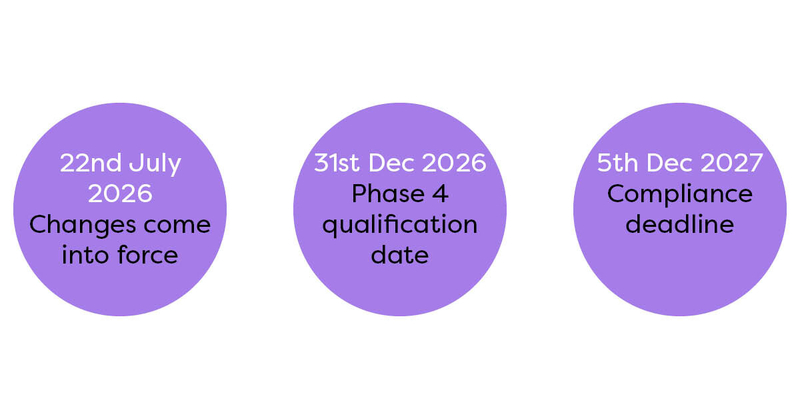
Key dates
What should organisations pay particular attention to?
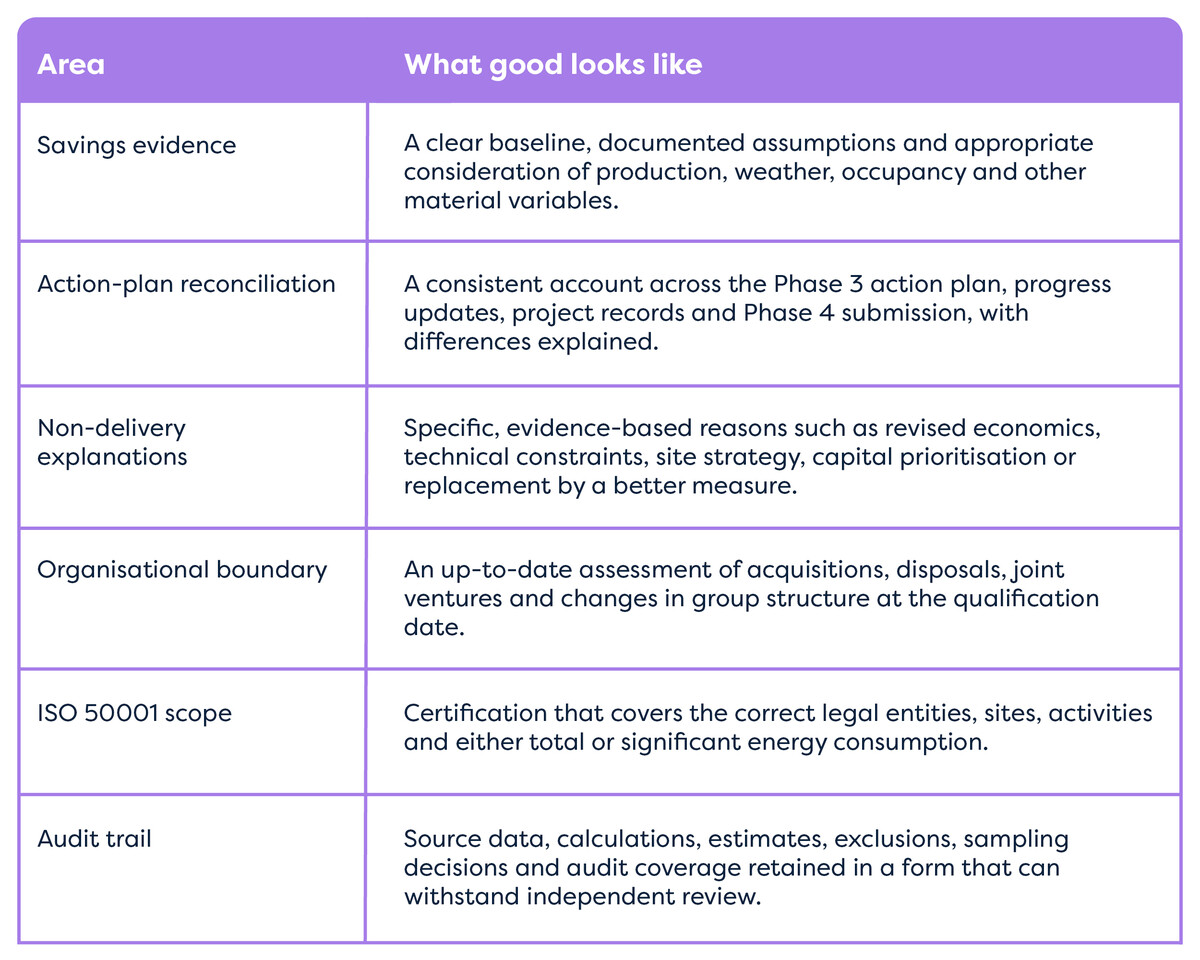
A useful test: could an independent reviewer understand what was planned, what happened, how the savings were calculated and why any measure did not proceed?
What BIP.Verco recommends doing now
Create one Phase 3 action tracker covering every committed measure, status, delivery date, savings evidence and reason for delay or non-delivery.
Agree savings methodologies early, particularly for operational, behavioural and controls measures that may be difficult to isolate retrospectively.
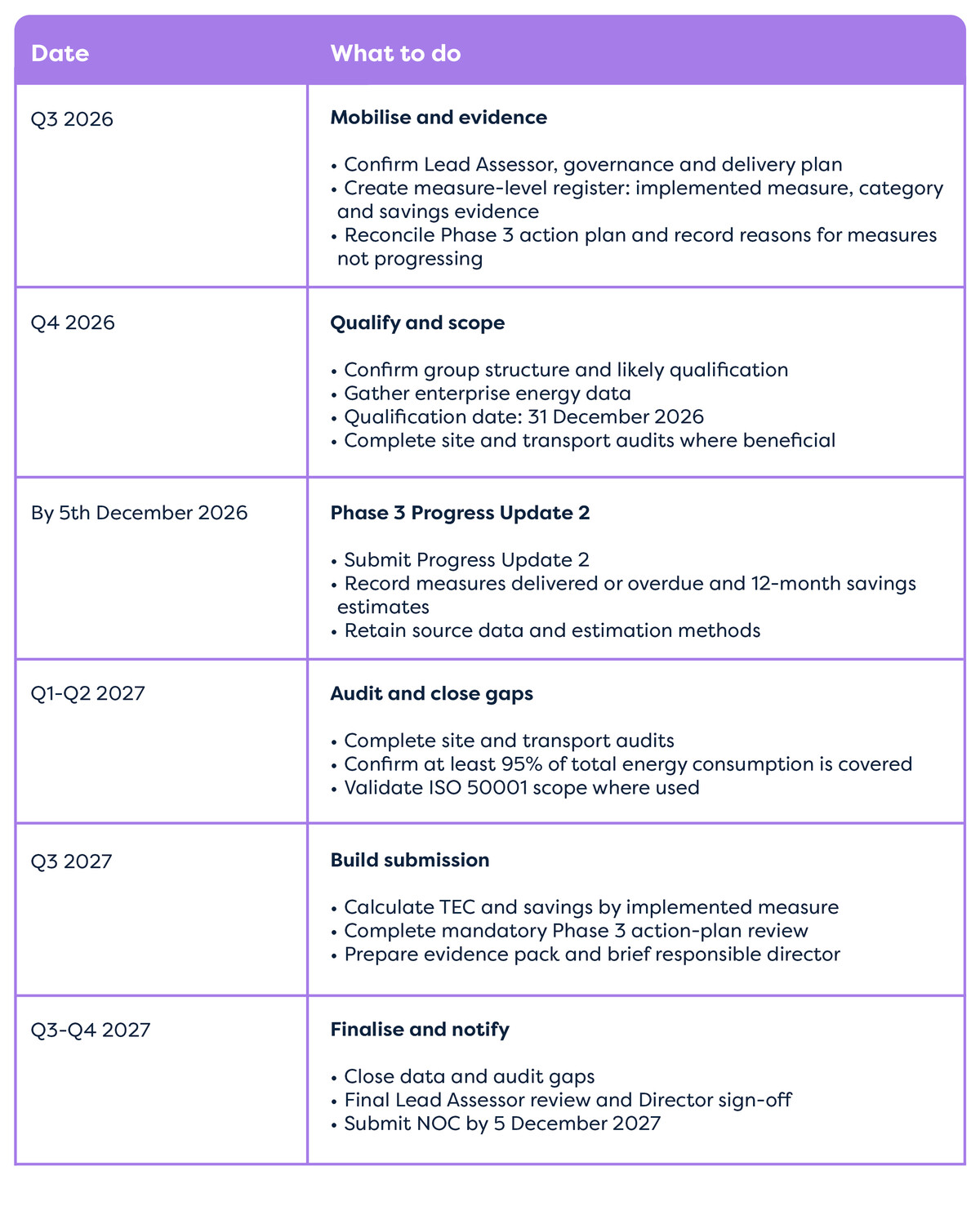
Follow our timeline guide to a successful ESOS submission process: