Capturing invisible profit: the case for operational energy optimisation in hotels
In the face of rising energy prices and increasing demand, operational energy efficiency has become one of the most effective ways for hotels to reduce costs and protect profitability. Unlike large-scale capital investments, improving how existing systems are run is a low-risk, immediate opportunity that does not disrupt the guest experience.
This article explores how hotel operators can cut energy costs, improve performance, and reduce operational risk without investing in new technology.
Why energy inefficiency is costing hotels more than they realise
Energy is now the second largest controllable operating cost (after labour) in a typical hotel. Over the past four years, a combination of rising wholesale energy prices, regulatory changes, and increased digital demand has doubled energy costs for UK hotels, with similar trends seen across Europe.
Despite this, many hotels still experience persistent inefficiencies, including:
- Systems running 24/7 unnecessarily
- Simultaneous heating and cooling
- Overridden temperature setpoints
- Gradual performance drift
These issues often go unnoticed but quietly erode margins and operational credibility. It is becoming clear that hotels don’t need new technology – they need to operate their existing systems more effectively.
Closing the performance gap: the role of operational energy optimisation
For hotels, the gap between how systems are designed to perform and how they actually perform in operation is typically around 30%. Closing this gap represents a significant opportunity for cost reduction. A proven approach involves:
- Enhancing existing Building Management Systems (BMS) with a ‘fourth layer’ of analytics
- Using software to clean, normalise, and interpret data
- Applying expert insight and structured processes to prioritise improvements
This enables continuous optimisation through low- or no-CapEx interventions, helping hotels realise substantial savings. For large luxury hotels, this can translate into:
- Six-figure annual profit recovery
- Reduced energy consumption
- No impact on guest comfort or experience
Why operational efficiency matters strategically
1. It reduces energy demand—not just price exposure
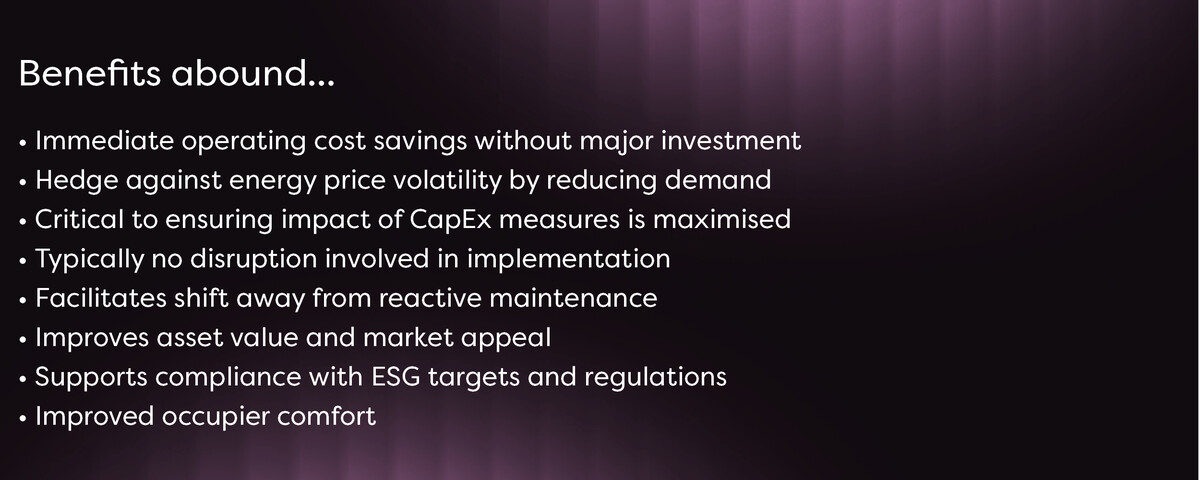
While energy price hedging can control what you pay, operational efficiency reduces how much energy you use. In a volatile energy market where prices remain above pre-2021 levels, demand reduction is the most reliable way to protect hotel P&L performance.
2. It strengthens governance and asset performance
Optimising operations supports better decision-making by enabling:
- Predictive maintenance, identifying faults before they escalate
- Carbon-aware asset management
- Reduced risk of budget overruns and guest comfort issues
It’s important to remember that optimisation is an ongoing and iterative process. It’s important to regularly review performance and opportunities in order to avoid operational drift.
3. It aligns owner and operator priorities
Operational efficiency creates shared value across stakeholders. For owners, this is not about engineering elegance. It is about protecting underwriting assumptions. For operators, it is about hitting Gross Operating Profit targets without pushing Average Day Rates beyond the market’s tolerance. This alignment is critical, as efficiency becomes the common ground where financial and operational goals meet.
4. It improves ESG performance and reporting credibility
Hotels that standardise and optimise energy data across portfolios consistently outperform peers in ESG benchmarks.
The advantage is not just reporting. It is also:
- Improved operational performance underpins stronger ESG outcomes
- Credibility from performance, not narrative
In today’s market, operational transparency and consistency are key differentiators.
The business case for hotel energy optimisation
Optimisation unlocks ‘invisible profit’: savings that already exist within the current estate but are lost through inefficiency.
Looking to optimise your hotel’s energy performance?
BIP.Verco supports hotel operators and owners in improving building energy performance through a tailored, data-driven approach.
This includes:
- Deep operational reviews
- Data analysis and system optimisation
- Selective use of specialist technology where appropriate
All underpinned by a strong understanding of how buildings operate in practice.
We’d welcome a chat if you’d like more information.
Experts on the topic