Take a Deep Dive and unlock energy-saving opportunities

Perhaps you’re looking for quick-win optimisation opportunities to propel you towards your energy reduction goals, or perhaps you’re looking to be ‘best in class’ and maximise the efficiency of your processes. Either way, small improvements to the operation of utilities (such as electricity, heat, and water) can result in noticeable energy savings that generate attractive financial returns. But how do you know which changes to suggest for your specific site, with its specific processes? How do you allocate your resources to see the biggest change in the fastest time?
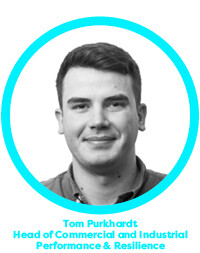
That’s where BIP.Verco’s Deep Dive service comes in. In this Q&A, Director Andrew Todd and Head of Commercial and Industrial Performance & Resilience Tom Purkhardt explain what Deep Dive studies are, how they help inform and equip organisations, and why our clients are seeing results within weeks.
What is a Deep Dive? What does it involve?
Andy: ‘Deep Dive’ is a term we use to describe a specific type of efficiency study we deliver, typically for processing or manufacturing industries. In a Deep Dive, we develop a detailed understanding of a site and how the utilities are used. We use our findings to build a detailed, bottom-up model. When we have that, we look at a whole range of reduction measures, from behavioural improvements to process optimisation technologies, to significant capital investments.
We wrap all our findings up in something called the Navigator. This is slightly different from a normal energy survey or scoping study because it contains all the data, all the calculations, and all the recommendations. The client gets it all at the end, and they can improve and update the file by adding more specific data if they have it, allowing them to keep savings and cost calculations up to date. The idea is that we go into real detail, come up with a broad range of opportunities across the whole process and leave the client with something they can take ownership of and continue to update. It’s a way of starting a process they can carry on, rather than just presenting them with a report that is only accurate at one moment in time.
Tom: I believe that with a Deep Dive, you put the high-level idea of a carbon reduction plan to one side and really focus on the utilities and processes themselves. You go to the site itself and see what’s actually feasible, how it operates, and how all the utility consumptions are interlinked. That’s how you get a tangible idea of what’s actually possible at each unique site.
Why might an organisation want or need a Deep Dive?
Andy: One reason might be that they want to see change quickly. Deep Dives are a detailed piece of work, but at the end the client is presented with a list of ideas they can progress. This list is action-oriented, so they can often begin to implement changes right away.
Another reason might be that they want to develop a holistic understanding of how particular utilities work across all the processes and companies involved in their operations. The Deep Dive approach can identify more relevant and site-specific optimisation opportunities than traditional surveys, so they're interested in the efficiency of that.
Tom: Agreed. Or a client might be looking to switch the way its heat, water or energy is supplied. They want to ensure they make a wise decision in terms of maximising demand reduction before making the strategically important deal supply deal, so an in-depth study can only help.
Finally, a site might want to become one of the best in the world, or the first to achieve a decarbonisation goal. To do that, their efficiency is paramount, so a study based on their site’s operations can show them how best to streamline their processes.
Why is now a good time to think about a Deep Dive?
Andy: Right now, in terms of global context, many companies have commitments to fulfil by 2030, but belts are tightening, and capital is being monitored and allocated more strictly. Businesses need to achieve reductions and demonstrate significant impact, but with less money at their disposal. That’s why these Deep Dives are so helpful – they uncover reduction opportunities of the process optimisation kind, which tend to need less capital to implement.
Tom: Also, especially for larger organisations, there will be outlier sites that don’t quite fit with overarching decarbonisation strategies and trends.A Deep Dive helps you pinpoint ways to get the outliers back in line and saves you the hassle and cost of acting too late to get these sites to conform to your strategy.
What are the wider benefits of a Deep Dive?
Andy: Though Deep Dives will often focus on a particular challenge– be it water, energy, thermal decarbonisation etc. – this is rarely looked at in isolation. So, if we’re looking at energy, there are often related water and waste minimisation benefits too. These result in secondary savings.
Another benefit is knowledge. Our team is usually joined by people from the company as they do their Deep Dive. This is something we encourage as it fosters a healthy sense of collaboration from the start. These people, who often work on the site (or perhaps in a group role), get to learn more about key findings, best practice, and the impact of reductions. They can then take this information away and share it with others throughout the organisation.
Tom: And there’s a real morale benefit to those from client organisations seeing the impact of process optimisation changes. When they see the savings resulting from the first set of measures, they are more willing to implement more of them. And when these savings are good for quality as well as energy, they tick so many boxes that there’s management buy-in. This results in new ideas, which then become projects, and the whole process becomes almost self-sustaining.
How long does a Deep Dive take, and what does the client need to do?
Andy: It does depend on the industry, but if we look at a process industry like a brewery or a dairy, a project usually takes about 12 weeks from start to finish. They’re relatively intense, involving research, interviews with sites, site visits, and the final write-up.
In terms of what the client needs to do, the more they can support the process, the better the outcome will be. It’s a collaborative study, and we don’t tend to use the word ‘audit’ because we don’t want companies to feel like we’re judging or marking them against something. Rather, we want to help them make their sites the best they can be, so we generally need help from those who can provide site data and make sure people are available for the kind of interviews that answer key questions.
Tom: It’s hard to say how long it will take to see results, but the client can start implementing changes as soon as we hand over the opportunity list. One of the most satisfying moments of my recent Deep Dive experience was giving one client the list of quick wins at the end of a site visit, which they implemented straight away. In just a few weeks when we were ready to feed back the results, they’d already started to see significant impact, and they're still improving by implementing the rest of the projects we recommended.
Why is BIP.Verco a great choice for delivering Deep Dives?
Andy: I think it’s a combination of energy efficiency expertise – we're a team of specialist consultants – and process understanding. Also flexibility, as we treat every site differently, answering specific challenges or questions that are posed. There’s not one blanket approach we apply to everyone; we adapt our Deep Dives to the needs of each site and use mature tools and approaches we’ve developed to produce the right kind of quality output. You can be sure, if you work with BIP.Verco, that you’ll get tailored, specific advice from people who not only know what they’re talking about but genuinely care about the results.
Tom: Exactly. We’ve been in this game for over 20 years, conducting Deep Dives for most of our clients, not just a few. We are well acquainted with best practice and innovation, so can pass that expertise on to those we work with.
Tell us about a couple of success stories involving deep dives.
Tom: I’ve been one of the lead auditors for Deep Dives for several years now.
Recently we were called to a site in Rio procuring a contract for a new heat supplier. They wanted us to do as much demand reduction as possible before they locked in the contract, because that affected their unit rates and payments. By the time we left the site, we had identified some glaring opportunities, most of which were control issues that could be easily addressed. We suggested the top three quick win measures that could save them 5% on energy straight away, and they immediately got to work. They saw results within the first few weeks, and they are now working on their short and medium-term opportunities. We’ve seen their inherent energy fall, and now they’re able to lock in the supplier contract at a far better rate.
Another Deep Dive was for one of the world’s largest breweries. The scale of the company meant that we had to focus on how different sites and sections interlinked. It also meant the client needed this to be a much longer project. We gave them quick wins at the start and followed up with monthly calls to check on their progress and advise them on the next rounds of measures. By the eighth month, their processes were self-sustaining, and they had achieved energy savings of 20%.
How do I find out more about Deep Dives, or request one?
To discover the details and pricing of our Deep Dive service, and how the benefits are realised across all levels of an organisation, browse our service document.
And if you’re interested in working with BIP.Verco on a Deep Dive, please don’t hesitate to get in touch.
Experts on the topic