Collaboration: The missing ingredient in regenerative business? A conversation with Enrico Foglia, Global Strategy Director, BIP.Verco
The transition from sustainability to regeneration requires more than ambitious goals. It demands new ways of thinking, new partnerships and new models of innovation.
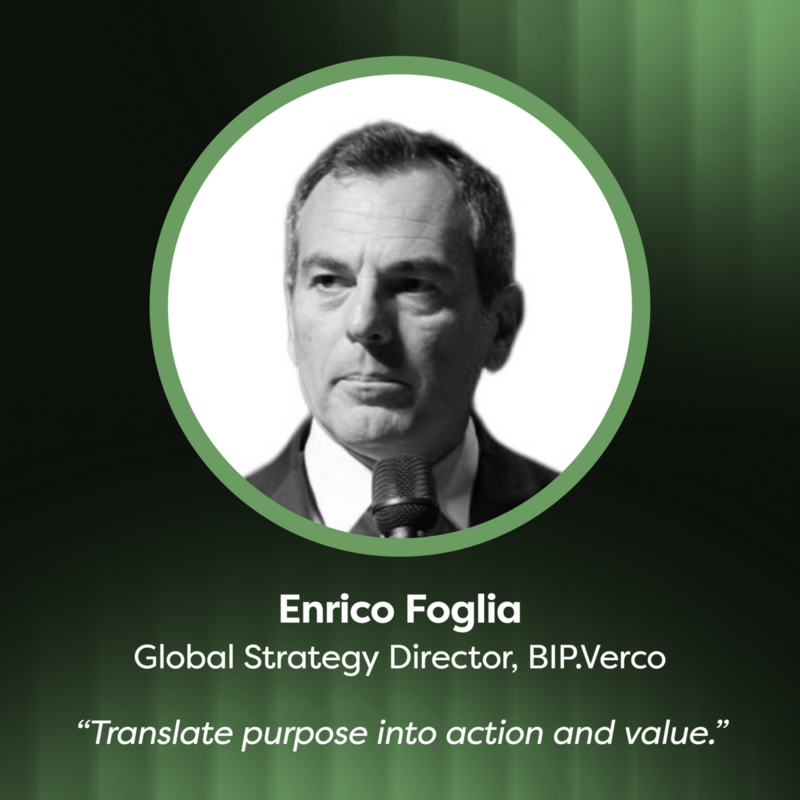
We spoke with Enrico Foglia, Global Strategy Director at BIP.Verco, co-author of “REGENERATION: The Future of Community in a Permacrisis World”, TEDx speaker and author on regenerative business, about why collaboration is at the heart of a regenerative future and where the biggest opportunities lie for forward-thinking organisations.
Q: Many organisations are embracing sustainability. Why is regeneration becoming the next frontier?
Enrico Foglia: Sustainability is an essential starting point, but regeneration asks a deeper question: how can businesses create positive value for society, communities and ecosystems rather than simply reducing negative impacts? The organisations leading this shift understand that long-term success depends on the health of the wider systems they operate within. Regeneration moves us from doing less harm to actively contributing to thriving economies, environments and communities.
Q: Your work often highlights collaboration as a critical element of regeneration. Why?
Enrico Foglia: No organisation can regenerate systems on its own. Climate change, biodiversity loss, resource scarcity and social inequality are interconnected challenges that require collective action. The most successful regenerative projects are built on collaboration networks that bring together diverse expertise, perspectives and capabilities.
Partnerships today extend far beyond the traditional customer-supplier relationship. Businesses need to engage with startups, universities, communities, investors, policymakers and innovators. This creates the conditions for systemic change rather than isolated improvement.
Q: What kinds of partnerships are most important?
Enrico Foglia: We see great value in bringing together stakeholders that each contribute something unique.
This includes:
- deeptech companies developing breakthrough technologies;
- universities and research centres generating new knowledge;
- innovation hubs and incubators accelerating adoption;
- civil society organisations and local communities providing insight and engagement;
- impact investors and funding partners enabling scale; and
- governments and policymakers creating supportive frameworks.
When these groups work together, innovations move faster, risks are shared and outcomes become more meaningful and lasting.
Q: What role do deeptech companies play in regenerative innovation?
Enrico Foglia: Deeptech organisations are particularly exciting because they tackle complex challenges with science-based solutions. Whether we're looking at carbon capture, green hydrogen, biotechnology, advanced materials or AI-driven environmental monitoring, these innovations have the potential to transform entire industries.
However, technology alone is not enough. The real opportunity comes when advanced technologies are combined with business leadership, investment, policy support and societal engagement. That's when innovation can scale and create systemic impact.
Q: Where are you seeing the biggest opportunities for sustainable and regenerative innovation?
Enrico Foglia: Several sectors are experiencing a powerful convergence of sustainability demands and innovation opportunities.
Agriculture and food systems are evolving rapidly as regenerative farming practices gain momentum. Fashion and consumer goods are exploring circular business models and sustainable materials. Industry and energy sectors are accelerating decarbonisation efforts, while finance and insurance are developing new approaches to sustainable capital allocation and risk management.
Across all of these sectors, changing consumer expectations, increasing regulatory requirements and growing ESG investment flows are creating strong incentives for innovation.
Q: How are stakeholder expectations shaping the market?
Enrico Foglia: Stakeholders increasingly expect businesses to contribute positively to society and the environment. Customers are becoming more conscious of the products they buy. Investors are directing capital towards organisations with credible sustainability strategies. Governments are introducing more stringent regulations.
This isn't a future trend- it's already happening. Organisations that understand these shifts and innovate accordingly will be better positioned to create long-term value and resilience.
Q: What does BIP's Sustainable Innovation Journey Framework bring to organisations?
Enrico Foglia: One of the biggest challenges organisations face is turning ambition into action. That's why we developed the Sustainable Innovation Journey Framework.
It provides a practical and structured route from strategic vision to implementation and measurable outcomes. We begin by understanding an organisation's current maturity and innovation capabilities. From there, we identify priorities, define initiatives, establish success measures and engage stakeholders throughout the transformation process.
The goal is simple: help organisations translate purpose into action and action into tangible value.
Q: What advice would you give business leaders looking to start a regenerative journey?
Enrico Foglia: Start by recognising that regeneration is not a project- it is a new way of creating value. Build partnerships. Listen to stakeholders. Invest in innovation. Be willing to experiment and learn.
Most importantly, understand that the future will belong to organisations that place sustainable innovation at the core of their growth strategy. The opportunity is real, and the future is already being built.
A short video on this topic
About Enrico Foglia
Enrico Foglia is Global Strategy Director at BIP.Verco, a mechanical engineer by background and an internationally recognised voice on regenerative business. He is co-author of “REGENERATION: The Future of Community in a Permacrisis World”, a TEDx speaker, author and board member of Assoholding. Throughout his career, he has advised leading international organisations on strategy, innovation and sustainable transformation.
BIP.Verco’s regenerative strategy service
We help organisations embed sustainability at the heart of their business strategy, unlocking new opportunities for innovation, competitive differentiation and long-term value creation.
Our tailored transformation approach is rooted in regenerative thinking and measurable impact, combining in-depth analysis with meaningful engagement across stakeholders and communities.
With our support, you can turn regenerative ambition into lasting business, environmental and social value.
Download the whitepaper: Regeneration for the future of business
In this whitepaper, developed by BIP and MIT Technology Review Brazil, you'll discover:
What regenerative business means in practice
How sustainable innovation accelerates transformation
The role of AI, deeptech and emerging technologies
Why transparency and ESG governance are becoming strategic assets
How collaboration drives regenerative outcomes
Real-world examples from leading organisations including Natura and ArcelorMittal
Fill out the form below to download the whitepaper and develop practical strategies for building a more resilient, regenerative business.
Other articles on this topic:
- Regeneration for the future of business: Why leading organisations are moving beyond sustainability
- What is driving adoption of a regenerative approach?
- Deeptech: Accelerating regenerative business transformation
- Energy, community and a regenerative approach