CDP 2026: Key changes to the questionnaire, scoring updates and how to prepare
CDP 2026 raises the bar, expanding scope and tightening alignment with global standards. Organisations that prepare early will be best placed to maintain and improve their scores. This guide summarises the key changes to the CDP 2026 questionnaire, the scoring updates that matter, and how to prepare.
The CDP 2026 disclosure cycle is the most significant evolution of the framework since the 2024 integration of climate, water and forests into a single corporate questionnaire. The 2026 CDP questionnaire broadens topic coverage, introduces ocean-related disclosures for the first time, expands forest commodity scoring, and tightens alignment with global standards including TNFD, SBTN, the GHG Protocol, RE100 and ESRS.
For reporting organisations, the message is clear: the bar is rising, and the scope of "environmental disclosure" is widening. Companies that prepare early, particularly across climate data quality, adaptation and value-chain reporting, will be best placed to retain and improve their CDP scores in 2026.

CDP 2026 at a glance
Scoring deadline: Week of 14 September 2026.
What's new: ocean disclosure debuts; cocoa, coffee and rubber join scored commodities; adaptation and resilience now affect scoring.
What's scored: climate change, forests, water security.
What's unscored (for now): ocean, plastics and biodiversity (though these may still indirectly influence scoring through broader value-chain and forests-related assessment areas).
SME headline: SMEs can now achieve an A score for climate change.
Direction of travel: depth and quality over volume of new questions; deeper alignment with TNFD, IFRS S2, SBTN, RE100 and ESRS, increasing emphasis on decision-useful disclosures and strategic planning.
CDP 2026 key dates and deadlines
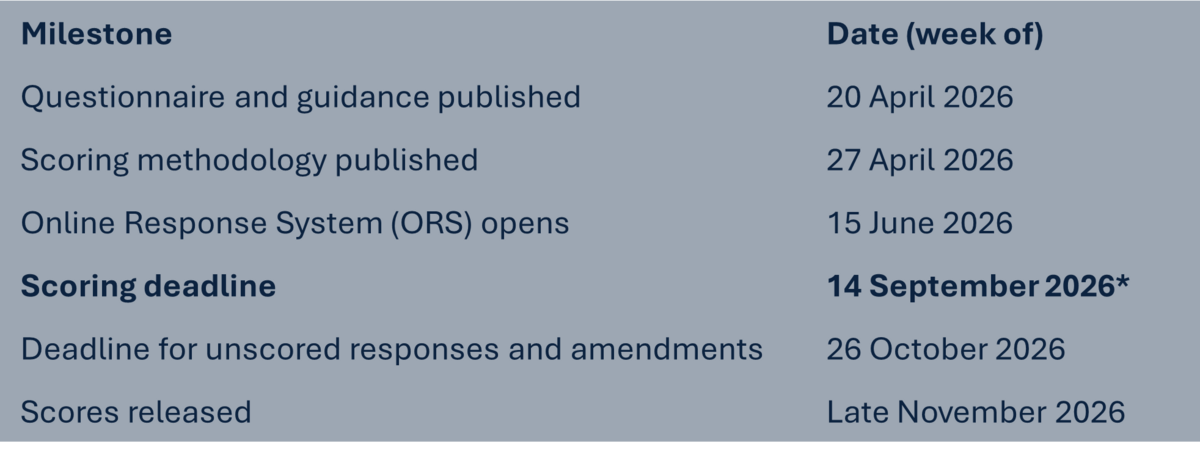
*Meeting the September deadline is essential for eligibility for a public CDP score this cycle, a key factor for any organisation under pressure from investors, customers or regulators to evidence environmental performance.
What's driving change in CDP 2026
The 2026 CDP cycle reflects three clear strategic shifts:
Broader nature coverage – ocean disclosure debuts, forest commodity scope expands, and TNFD alignment deepens.
Stronger framework interoperability – CDP is positioning itself as a single-source reporting layer that feeds ISSB (IFRS S2), CSRD/ESRS, GHG Protocol, RE100, SBTN and TNFD disclosures.
A higher quality bar in scored themes – fewer new questions, but tighter expectations on risk assessment quality, adaptation, target credibility and verification.
CDP 2026 framework alignment: IFRS, ESRS, TNFD, SBTN and more
CDP 2026 is positioning itself as a single-source reporting layer. One disclosure cycle that feeds the frameworks now shaping mandatory and voluntary ESG reporting. For most disclosers, the practical benefit is straightforward: one set of emissions data, one physical risk assessment, one verification process, feeding multiple disclosure obligations across the same cycle.
The climate alignment is the headline:
IFRS S2 / ISSB: CDP 2026's broadened adaptation and resilience expectations mirror IFRS S2's physical risk requirements.
ESRS (CSRD): emissions verification carried out under EU Member State-approved ESRS standards is now accepted by CDP, provided full details are reported.
GHG Protocol: continued alignment, with the new Land Sector & Removals Standard (LSRS) introduced as a transition step in 2026 ahead of full integration in 2027.
RE100: new datapoints on time matching, supply agreement length and biomass co-firing bring CDP into closer step with RE100 reporting.
Alignment with nature frameworks also deepens in 2026, particularly TNFD across the forests and water security modules, and SBTN through the recognition of validated Science-Based Targets for Nature at leadership level. For organisations with material nature-related exposure, CDP increasingly functions as a single entry point into this evolving disclosure landscape.
For organisations already navigating mandatory climate disclosure regimes, the CDP disclosure cycle this year offers a strong opportunity to bring reporting into a more cohesive workflow. Getting this right, particularly across data boundaries, verification approaches and consistent narrative is where early planning and the right support make the biggest difference.
Key changes to the CDP 2026 questionnaire
CDP 2026 Climate Change Questionnaire: a transition year
The 2026 climate questionnaire is a transition year for land-sector reporting and brings several practical changes:
GHG Protocol Land Sector & Removals Standard (LSRS): no quantitative reporting required yet, but organisations will indicate whether land sector activities are relevant and report on their evaluation status. Full alignment is planned for 2027 with some scoring linked to GHG Protocol Agriculture Guidance planned to be removed during the LSRS transition.
RE100 alignment: new datapoints cover time matching of renewable electricity, length of supply agreements and biomass co-firing.
ESRS verification accepted: emissions verification carried out under EU Member State-approved ESRS standards will be accepted, provided full details are reported.
RE100 members, EU disclosers and any organisation with land-sector activities should re-examine their data collection processes now with 2027 expected to require significant preparation.
CDP 2026 adaptation and resilience: now a scoring driver
According to a CDP report, 48% of large reporting companies identified physical risks as having a substantive effect on their business. In response, CDP has broadened modules covering governance, strategy, risk assessment and financial planning to capture how organisations are actively responding to physical risks, not just identifying them.
Identifying physical risks is no longer sufficient. Scoring will increasingly favour organisations that can evidence adaptation actions, resilience investments and integration into financial planning, mirroring IFRS S2 expectations.
CDP 2026 Nature Disclosure: ocean joins, forest commodities widen, water tightens
CDP is broadening its nature coverage in three notable ways:
Ocean disclosure debuts as an opt-in route, embedded across existing modules. Unscored in 2026 but strongly encouraged for high-impact sectors (fishing, shipping, offshore energy).
Cocoa, coffee and rubber become scored commodities, joining cattle, palm oil, soy and timber under a single methodology with their own sub-scores. Validated SBTs for Nature now count toward leadership-level recognition.
Water security expectations tighten, with deeper wastewater treatment disclosure (treatment level, discharge volume, regulatory compliance) aligned to GRI 303, plus expanded pollutant management requirements.
Plastics disclosure also expands (still unscored), with new questions on targets, packaging formats, design for recycling and reuse models.
Organisations with material exposure to these themes, particularly in fast moving consumer goods, agribusiness, hospitality, manufacturing or water-intensive sectors, should review their data foundations early.
CDP 2026 SME questionnaire: key updates
Three changes matter most for SME disclosers:
New Forests and Water Security modules – unscored in 2026, but data collected will inform future SME scoring.
SME "A" score now available for Climate Change – previously capped at B, this creates a clear leadership pathway and a new credential for procurement and investor conversations.
RE100-requested companies move to the full questionnaire regardless of size.
SMEs in the supply chains of CDP Supply Chain members should expect more nature-related data requests this cycle.
CDP 2026 scoring and sector allocation
Financial services now receive public forests and water security scores too.
There are no new essential criteria – revisions focus on rewarding higher-quality risk assessment (process quality, value-chain coverage, time horizons) rather than prescriptive tools or frequencies.
Sector reclassification can change which themes you're required to disclose on, which criteria apply, and your scoring outcome. Review your CDP-ACS classification before the portal opens 15th June.
CDP 2026 FAQs
When is the CDP 2026 scoring deadline? 14 September 2026. The Online Response System (ORS) opens on 15 June 2026, with scores released in late November 2026.
Is ocean disclosure scored in CDP 2026? No. Ocean, plastics, and biodiversity remain unscored themes in 2026; climate change, forests, and water security are the only scored themes. However, organisations should note that ocean and biodiversity related topics may still be indirectly assessed through scored modules (e.g. value chain impacts, forests, and water disclosures), and can therefore influence overall scoring outcomes.
How BIP.Verco can support your 2026 CDP disclosure
Whether you’re aiming to improve your score, close key gaps or better connect CDP with your wider reporting, BIP.Verco supports organisations throughout the disclosure journey. We can help deliver robust, compliant ready climate disclosures that align with broader reporting frameworks and support confident, decision-useful reporting. Get in touch with our team for an informal chat about your CDP disclosure needs.